MERIT
,
Healthcare Data Processing and Management
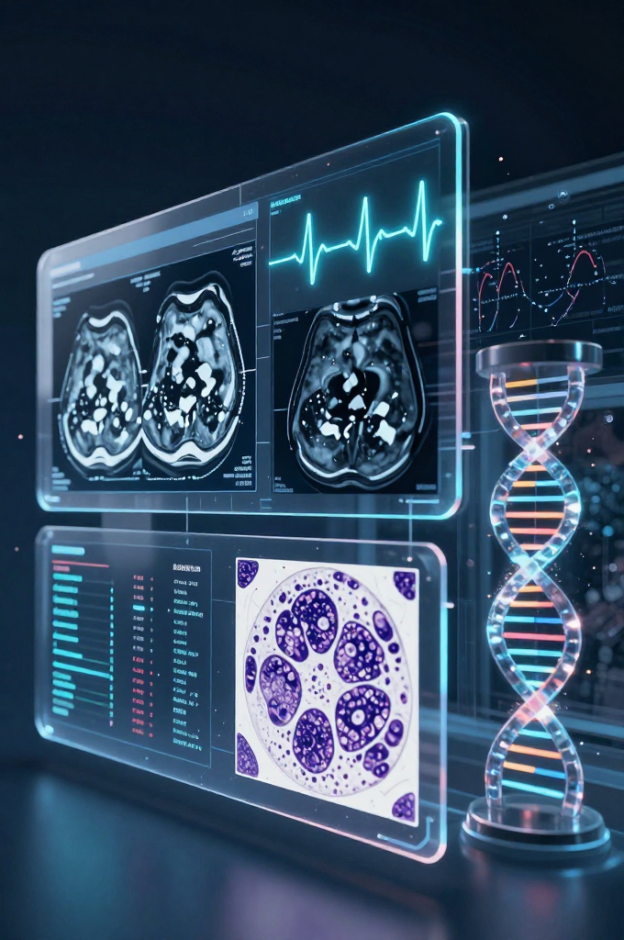
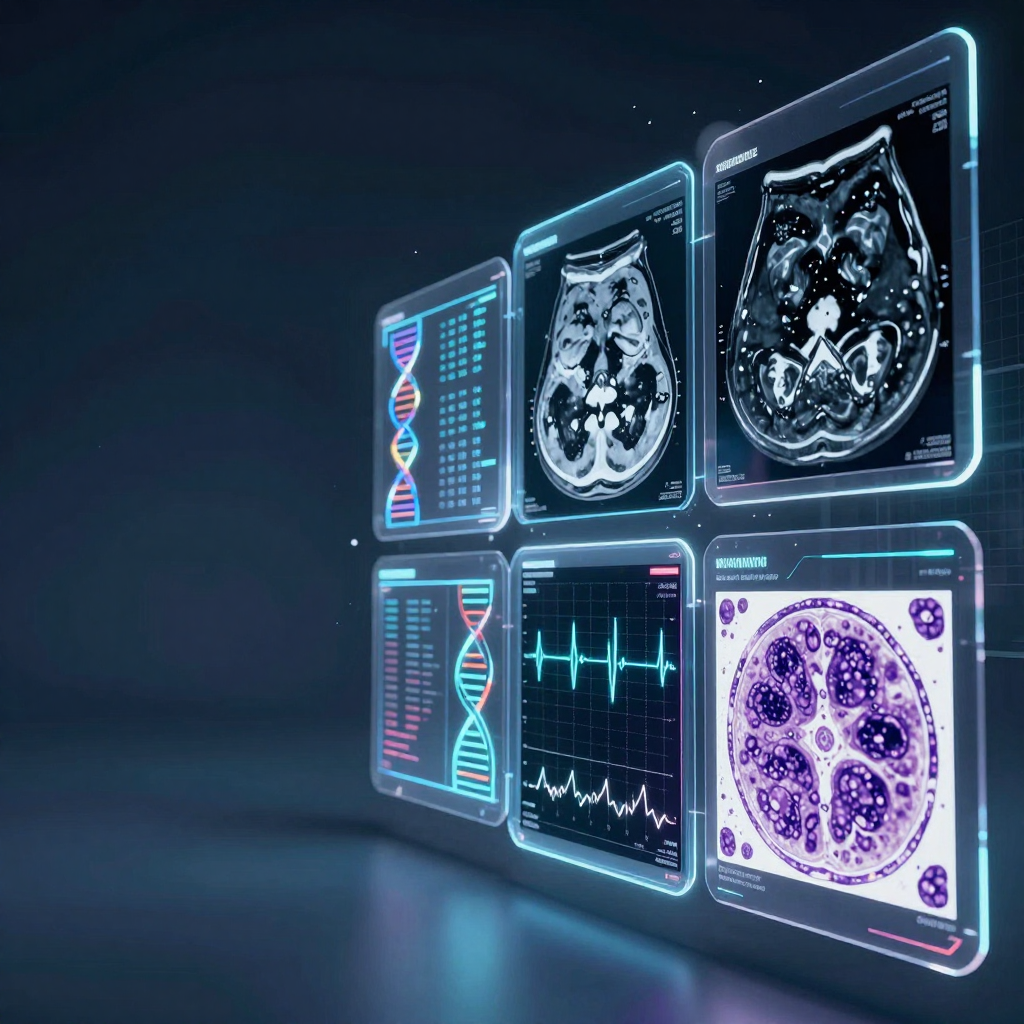
Learn how real clinical domains generate and use medical data (imaging, lab results, ECG/EEG signals, pathology, and genomics) and how to process it responsibly for analysis and research.

Effective processing and management of healthcare data supports better patient care, more efficient operations, and stronger research and decision-making.
This course introduces key concepts, tools, and practical approaches for working with healthcare data across multiple medical domains.
Course goals
The goal of the course is to build a solid foundation in healthcare data structures, standards, and storage, paired with practical skills in processing, analysis, and ethical data management.
- Understand healthcare data structures, existing standards, data acquisition, and healthcare-specific storage needs.
- Learn fundamentals of human anatomy and common pathologies, linking medical concepts to data types via cases.
- Develop practical skills to process and analyse textual, numerical, categorical, and visual medical data using existing tools.
- Learn to prepare data for research and analysis, including legal and ethical aspects of healthcare data use.
- Strengthen communication and teamwork through a group project focused on preparing healthcare data for research.
Learning outcomes
- Explain healthcare data structures, standards, and storage methods, including where they apply and their limitations.
- Process and analyse multiple healthcare data types using current tools/software, extracting meaningful insights.
- Prepare and manage healthcare data for research responsibly (legal/ethical compliance) and work effectively in teams.
Main topics
- Healthcare data overview across domains (textual, numerical, categorical, imaging, signals, genomic) and how these data are used in care, public health, and research.
- Research Ethics Committee and legal framework: access, sharing, anonymization, and secondary use of medical data.
- Medical data processing software and open databases, including responsible dataset selection and reuse.
- Diagnostic data pipelines: visual/invasive methods, electrophysiological signals (e.g., ECG/EEG), molecular/genetic diagnostics, lab diagnostics, pathology/histology, radiology and DICOM concepts.
- Final group project: choose a medical domain and prepare data for research (structuring + basic analysis) plus data-access documentation with an ethics/teamwork focus.
About Instructor
Edgars Edelmers
I am committed to integrating artificial intelligence and 3D technologies into the biomedical field, with a focus on an interdisciplinary approach to improve diagnostics, research methodologies, and medical education.
1 Course
Preview this Course
All courses
Healthcare Data Processing and Management
Public eServices
Design of Adaptive Systems
Business Process Development and Management
Innovation Ecosystems: A Three-Part Learning Journey
Ekonomisko procesu prognozēšana
Robotics and Process Automation
Software automation in healthcare
Career Lab: Plan, Practice, Succeed
Data Spaces
Production Digitalization – Short Course Series
Practical Applications and Programming of Industrial Robots
Testa kurss 2
Machine Translation Skillset
Machine Learning for Textual Data Processing
Digital Edutainment Elements in Translation
Digital Sentiment Analysis
Multimodal Digital Semiotics
Digital Semantics and Pragmatics
Arhitektūras projektēšana
Biznesa etiķete un komunikācija
Introduction to Linguistics
Artificial Intelligence: Search and Its Applications
Telecommunications and Computer Networks
Course navigation
Login
Accessing this course requires a login. Please enter your credentials below!