Monte Carlo Methods in Finance Engineering
-
Course Introduction
Introduction2 Topics|1 Quiz -
Lesson 1. Linear Congruental Generator2 Topics|1 Quiz
-
Lesson 2. Normally Distributed Random Variables and Vectors Generation2 Topics|1 Quiz
-
Lesson 3. Integral Estimation.2 Topics|1 Quiz
-
Lesson 4. Expected Present Value1 Quiz
-
Lesson 5. Brownian motion. Geometric Brownian motion2 Topics|1 Quiz
-
Lesson 6. GBM. Path-Dependent Options1 Topic
-
Lesson 7. The effectiveness of simulation evaluation2 Topics|1 Quiz
-
Lesson 8. Variance reduction methods3 Topics|1 Quiz
-
Lesson 9. Introduction to RTU High Performance Computing (HPC) Environment
Quizzes
All courses
Publiskie e-pakalpojumi
Biznesa procesu attīstība un pārvaldība
Inovāciju ekosistēmu attīstība un pārvaldība
Inovācijas ekosistēmas: trīsdaļīgs mācību ceļš
Artificial Intelligence in Healthcare
Data Security and Protection in Health and Social Care
Kiberdrošības pamati un labās prakses organizācijām
Artifficial Intelligence Driven Process Control Systems
Skaitliskās metodes
Paralēlā programmēšana transporta sistēmās
Software Automation in Healthcare
Business Analytics
Vibrotechnology and Vibromachines
Elektroinženieru matemātikas datorrealizācija
Siltuma elektrostacijas
Būvmehānika
Monte Carlo Methods in Finance Engineering
Fundamentals of Computer Simulation and Modelling
Starptautisko pārvadājumu vadīšana
Maritime Cybersecurity Management course
AI Implementation in Industry
Innovation Ecosystems Development and Management
Healthcare Data Processing and Management
Basics of Control Theory (Regulēšanas teorijas pamati)
Paralēlā programmēšana datorgrafikā un attēlu apstrādē
Public eServices
Design of Adaptive Systems
Business Process Development and Management
Innovation Ecosystems: A Three-Part Learning Journey
Ekonomisko procesu prognozēšana
Robotics and Process Automation
Career Lab: Plan, Practice, Succeed
Data Spaces
Production Digitalization – Short Course Series
Practical Applications and Programming of Industrial Robots
Machine Translation Skillset
Machine Learning for Textual Data Processing
Digital Edutainment Elements in Translation
Digital Sentiment Analysis
Multimodal Digital Semiotics
Digital Semantics and Pragmatics
Arhitektūras projektēšana
Biznesa etiķete un komunikācija
Introduction to Linguistics
Artificial Intelligence: Search and Its Applications
Telecommunications and Computer Networks
Lesson 9. Introduction to RTU High Performance Computing (HPC) Environment

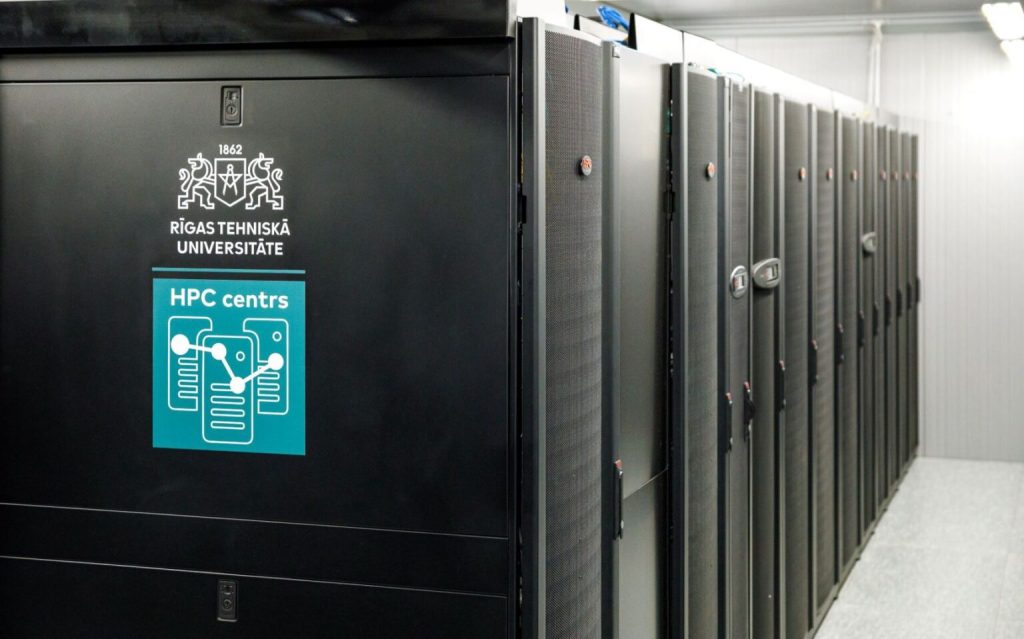
This section introduces the High Performance Computing (HPC) environment used in the course, based on the infrastructure of the RTU High Performance Computing Center https://hpc.rtu.lv/.
The RTU HPC system provides access to powerful computing clusters designed for large-scale data processing, simulations, and scientific computing. It supports applications across engineering, finance, and data analysis, enabling efficient execution of computationally intensive tasks.
Learners will gain an overview of how HPC systems operate, including working within a Linux-based environment, accessing systems remotely, managing data, and running computational jobs on a cluster. This section reflects real-world HPC workflows and tools used in research and industry.
⚠️ Note: Detailed hands-on tutorials, step-by-step workflows, and full practical exercises (including Python simulations, data transfer, and financial modeling tasks) are available only to learners enrolled in the full course.
For more information about the RTU HPC infrastructure, you can explore:
- RTU HPC Usage Guide HPC User Manual — RTU HPC 2.6 documentation
- RTU HPC Center Website High Performance Computing Center | Riga Technical University
This section provides a foundational understanding of HPC environments and prepares learners for deeper practical engagement available in the full course.