Assessment
The course includes laboratory and practical activities designed to support applied understanding of adaptive systems.
This course introduces the principles of analysis and design of adaptive systems, with a focus on modern approaches to control, modelling, and stabilization of electrotechnical systems in changing operating conditions.
The course includes laboratory and practical activities designed to support applied understanding of adaptive systems.
Students develop the ability to analyse adaptive systems, identify their operating principles, evaluate parameters, and apply suitable methods for system design and stabilization.
Take your first step towards advanced digital skills with this self-paced MOOC, developed as part of the RTU study course Design of Adaptive Systems.
This course is freely accessible and designed for independent learning. Please note that completion of this MOOC does not provide a certificate. However, the full-scale study course offers additional value through guided learning, assessment, and deeper engagement with course content.
The course contributes to the development of advanced digital competences aligned with DigComp levels 7–8.
For more information about lifelong learning opportunities at RTU, please contact the RTU Lifelong Learning Department.

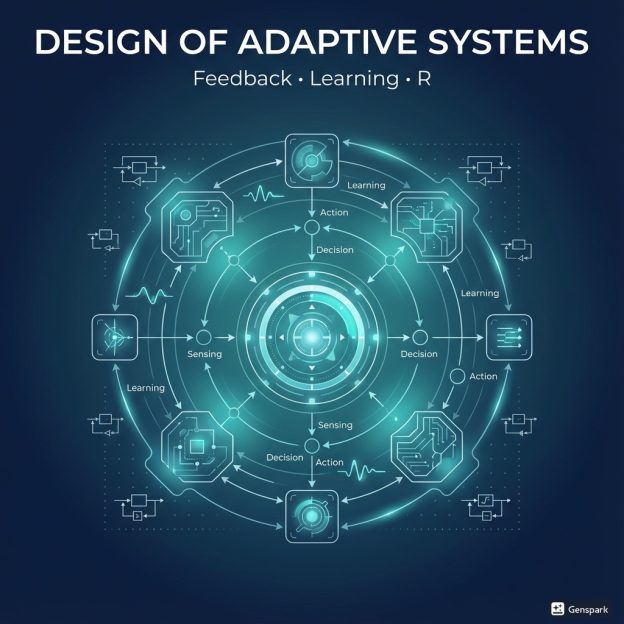
The course provides knowledge about adaptive systems, their structure, operating principles, and methods used for analysis and design. The study process addresses the calculation of adaptive system parameters and the design of control solutions suitable for variable and uncertain operating conditions.
Particular attention is paid to the stabilization of electrotechnical systems and to the application of advanced technologies for modelling and analysis. The course supports the development of advanced digital skills and promotes the ability to work with complex engineering systems in a structured and analytical way.
The learning process is based on independent and guided study activities and is intended to strengthen both theoretical understanding and practical problem-solving abilities in the field of adaptive systems.
The goal of the study course is to promote students’ understanding of modern high-performance computing technologies and their use for designing adaptive systems, and to develop skills in performing computer calculations for determining the parameters of complex adaptive systems in electrical engineering systems and industrial processes.
Tasks of the study course:
You must log in and have started this course to submit a review.